The fast-changing and highly competitive environment of Malaysia requires small and medium enterprises to develop strong adaptability skills, which enable them to survive and achieve business growth. Businesses need to adapt their operations based on changing customer demands, market developments, and technological innovations. The company needs to find skilled workers who can start their work immediately because their business operations need to keep running. The standard ways of hiring new employees take a lot of time, which leads to delays for both business expansion and project completion.
Rapid Talent Deployment provides businesses with a contemporary solution that enables them to quickly and effectively fill their workforce needs. The system enables organizations to select qualified candidates who will fulfill current staffing requirements. The system maintains operations without interruptions by managing peak demand periods, which lead to earlier planned shutdowns. The system enables SMEs to keep their operational flexibility while they remain competitive in their market and improve their capacity to handle unexpected business changes.
What is Rapid Talent Deployment?
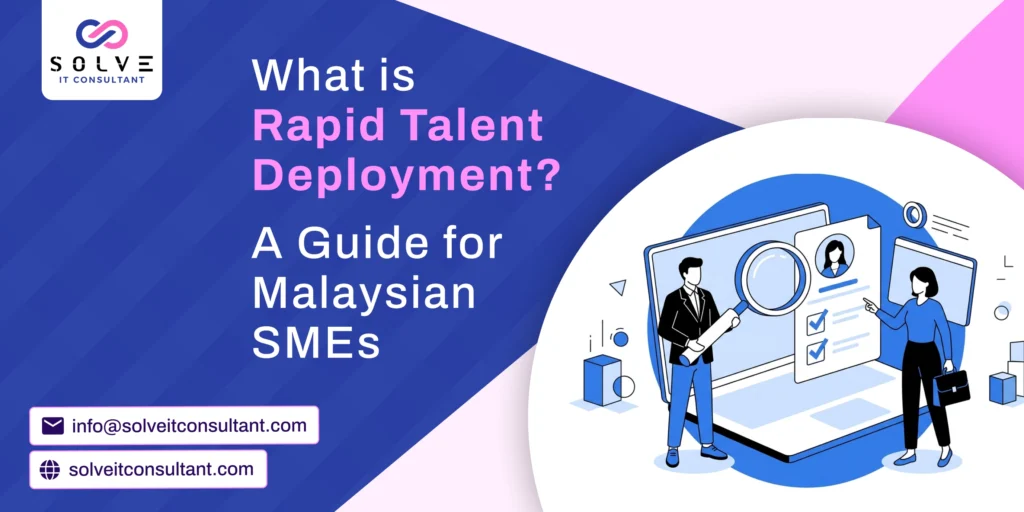
Rapid Talent Deployment is a hiring approach that focuses on quickly sourcing, onboarding, and assigning skilled professionals to specific roles. The method enables organizations to complete their hiring process within a few hours because it operates at high speed with efficient performance. The process typically involves organizations using temporary staff members, contract employees, and specialized agencies to handle their staffing needs. The process enables organizations to fill their immediate staffing gaps without experiencing any delays to their operations.
The main objective of this strategy is to provide flexibility in workforce management while maintaining productivity. Companies do not need to maintain a large permanent workforce and can instead hire talent based on demand. The solution brings down expenses, which helps businesses operate their activities at maximum efficiency. The system enables SMEs to respond with agility to changes in their project work, market conditions, and workload requirements.
Why Malaysian SMEs Need Rapid Talent Deployment
Malaysian SMEs face challenges because they need to operate their businesses with limited financial and human resources, which prevents them from employing a big workforce. Through Rapid Talent Deployment, organizations acquire skilled workers who stay with them only for the necessary work. The method enables companies to deliver their work efficiently while keeping their business expenses at acceptable levels. The solution prevents companies from hiring extra workers when their business activity levels drop.
Various sectors face workforce demand that appears unexpectedly because of seasonal trends or project-related needs. Through rapid deployment, SMEs gain the ability to adjust their workforce size according to specific requirements. The system enables companies to manage higher workload demands while protecting their workforce from excessive pressure. The method protects service standards while delivering projects within their scheduled completion times.
The Advantages That Rapid Talent Deployment Provides
-
Faster Hiring Process
The traditional hiring approach requires multiple stages, which include job advertisement creation, resume evaluation, candidate interviews, and employee orientation, that take an extended period. Rapid Talent Deployment simplifies this process by providing pre-screened candidates who are ready to start work immediately. The system enables companies to quickly hire critical workers who stop their business functions from operating normally. Projects will progress without any delays because of this solution.
Faster hiring gives SMEs a competitive advantage by enabling them to respond quickly to new opportunities. Businesses can take on urgent projects without worrying about talent shortages. The ability to move quickly between various operations gives companies a competitive advantage in their business market. The process enhances company productivity while it enables organizations to achieve their expansion objectives more rapidly.
-
Cost Efficiency
The process of hiring permanent staff members involves businesses making commitments to sustain employees through their complete employment period, which includes paying salaries and providing required employee benefits, training programs, and all associated operational expenses. Through rapid talent deployment, businesses obtain the ability to recruit workers who are needed for their operations.
Businesses can use their savings from permanent staff recruitment to support their critical business functions, which include technology, marketing, and business growth activities. The first option increases financial stability for businesses and their potential for future growth. The second option enables SMEs to test out new initiatives because they can do so without facing major monetary losses. The ability to control costs throughout their operations serves as a fundamental element that determines the company’s value throughout its existence.
-
Access to Skilled Professionals
SMEs can find qualified workers through staffing agencies and talent platforms, which provide access to experienced professionals who have developed specific skills. The candidates possess the necessary skills that enable them to start working immediately. The process eliminates the requirement for complete employee training and onboarding, which follows traditional methods. It provides businesses with instant production capabilities that begin on the first day of employment.
The ability to access skilled professionals enables organizations to sustain their service quality while managing intricate project needs. Skilled employees deliver vital knowledge that drives organizational advancement through their capacity to solve problems. The solution enhances business operations while increasing customer satisfaction. The solution enables SMEs to establish their presence in the market against major companies.
-
Flexibility and Scalability
Rapid Talent Deployment enables companies to change their employee strength according to their present operational demands. SMEs can adjust their workforce needs by hiring more employees or reducing their staff based on the demand for projects and market trends. The system enables organizations to handle their work tasks effectively while making work commitments that last for a specific time period. The solution protects organizations from hiring too many or too few employees.
The ability to scale operations is essential for businesses that require rapid growth to achieve their operational targets. The method enables SMEs to pursue fresh business opportunities without facing recruitment difficulties. The solution enables businesses to grow their operations while maintaining their ability to adjust to changes. The combination of flexible systems with scalable systems enables organizations to compete effectively within markets that experience ongoing changes.
Industries in Malaysia Using Rapid Talent Deployment
The various sectors present in Malaysia currently use Rapid Talent Deployment to maintain their competitive edge. The IT sector uses this method to recruit developers, analysts, and cybersecurity experts for temporary employment. Manufacturing companies use this system to handle their production demands during their most active manufacturing times. The method enables companies to sustain their operational output while maintaining their work efficiency.
The strategy provides major advantages to the hospitality and logistics sectors during their peak operational times and holiday periods. Businesses can handle increased demand without compromising service quality. Rapid deployment provides operational continuity for organizations during their most challenging work periods. The system improves customer experience while driving business results.
The Implementation Process of Rapid Talent Deployment
-
Identifying Workforce Needs
The first step in rapid talent deployment is identifying the specific roles and skills required for a project or business function. SMEs need to create job descriptions, which should include details about work tasks, expected work duration, and expected results. The selection process becomes more efficient through this method, which enables better candidate assessment. Workforce planning needs assessment procedures that must be followed to achieve the exact requirements.
The established process for defining needs helps organizations avoid making wrong hiring decisions. The system ensures businesses receive professionals who can achieve their desired outcomes. The system enhances productivity while decreasing operational mistakes. The process of talent deployment requires organizations to comprehend their complete workforce requirements.
-
Partnering with Staffing Agencies
Many SMEs collaborate with staffing agencies that specialize in rapid hiring solutions. The agencies maintain a database that contains candidates who have undergone screening and possess diverse skills and experience. The system provides talent-matching capabilities, which enable quick talent acquisition. The process reduces the burden that internal teams need to manage.
The use of dependable recruitment agencies leads to improved hiring results and decreased operational hazards. The agencies perform their work by processing initial candidate assessments, conducting background investigations, and creating candidate lists. The procedure results in time savings, which lead to improved hiring results. Successful talent deployment depends on establishing strong partnerships between organizations and their partners.
-
Quick Onboarding and Deployment
The organization uses an efficient onboarding system to complete candidate onboarding procedures after selecting candidates. The process consists of basic orientation, training, and role-specific guidance. The organization immediately assigns employees to their tasks. The process results in reduced operational downtime, which enables the business to continue its operations.
The process of quick onboarding enables newly hired employees to learn their job duties more quickly. The system enables employees to start working productively from their first day. The system allows businesses to conduct their operations without interruptions and without needing to stop work. The organization needs effective onboarding processes because they provide multiple advantages when deploying employees rapidly.
-
Performance Monitoring After their deployment
SMEs need to track employee performance through ongoing assessments to verify that staff members fulfill their duties. The assessment process involves monitoring three specific aspects, which include productivity levels, work quality, and deadline compliance. The assessment process provides two main benefits because it helps identify performance gaps and establishes responsibility for results. The system enables organizations to enhance their decision-making process.
The process of providing regular feedback together with evaluation activities leads to enhanced performance results throughout the entire workforce. The process ensures that employees match business objectives and goals. The process of monitoring helps organizations to sustain operational quality throughout their entire work functions. This method produces improved project results that support sustainable organizational development.
Challenges to Consider
The implementation of rapid talent deployment brings operational benefits to organizations, yet it introduces specific obstacles that organizations need to resolve. The recruiting process for temporary workers and contract employees creates challenges that make it hard to maintain consistent work standards. The organization needs proper screening procedures, together with effective training methods and strong supervision mechanisms, to solve this issue.
The process of incorporating temporary employees into preexisting teams and organizational culture represents another obstacle that organizations need to overcome. New employees need time to learn the organizational workflows and the specific ways their colleagues will communicate with them. Organizations need to build a workspace that helps workers to work together effectively. Organizations need to solve these problems because they will help them reach their desired outcomes.
Best Practices for Malaysian SMEs
-
Work with Reliable Partners
Successful rapid talent deployment requires organizations to select their staffing partner through a proper selection process. The reliable agencies deliver candidates who possess both the necessary skills and verified experience. The system helps organizations to choose their employees better while decreasing their recruitment hazards. The system enables organizations to complete their hiring needs through an expedited process.
Through strong partnerships, small and medium enterprises (SMEs) develop a talent pipeline that they can use to meet their future employment requirements. The process of hiring employees becomes faster and more effective as time passes. The system enhances the overall process of workforce planning together with workforce management. Reliable partners, whom businesses trust, will help them achieve their strategic goals through extended periods of collaboration.
-
Define Clear Roles and Expectations
The process of defining roles and responsibilities, together with specific expectations, defines roles for every employee. The process helps people to understand their work better, which results in lower workplace confusion and better work output. The system enables employees to complete their work tasks without facing any communication obstacles. The system leads to better operational results.
The process of establishing clear communication channels results in enhanced teamwork between staff members, which leads to better organizational performance. The system enables employees to align their work activities with the overall business objectives of the organization. The process leads to better results because it creates improved efficiency. Organizations require defined performance expectations to achieve successful results from their talent deployment initiatives.
-
Focus on Skill-Based Hiring
SMEs should prioritize practical skills and experience rather than just academic qualifications. Employees who possess essential skills for their jobs can start working immediately because they require minimal instruction. The system enables organizations to operationalize their business activities through better staff management and faster employee onboarding processes.
Future of Rapid Talent Deployment in Malaysia
Rapid Talent Deployment will experience growth in Malaysia because digital transformation and changing business requirements are becoming more prevalent. The majority of SMEs now implement hiring methods that allow them to adapt their workforce according to market conditions in order to maintain their competitive position. Industries will continue this practice because their operations require it. The company will establish this process as an essential component for developing its workforce plans.
The future of this approach will focus on agility and efficiency, together with innovation. The implementation of rapid talent deployment by businesses will provide them with a competitive edge. The system enables businesses to quickly adapt their operations whenever market needs or new business opportunities arise. The strategy will support business growth through its long-term economic benefits.
Conclusion
The implementation of Rapid Talent Deployment helps Malaysian SMEs to enhance their workforce management system and their employee recruitment methods. The system provides multiple advantages, which include quicker employee selection processes and reduced expenses, together with increased operational flexibility. Contact us as The system enables businesses to achieve higher operational efficiency while remaining competitive in their respective industries. The system enables organizations to sustain their growth while pursuing new business opportunities.
The adoption of this approach provides great advantages for SMEs that aim to achieve both growth and successful outcomes. The system enables organizations to react fast to their emerging business needs and market opportunities. The right approach enables businesses to develop a flexible and competent workforce. This ensures their business operations will remain successful throughout all upcoming business periods.